
The book community has always thrived on shared language.
From “book boyfriend” to “enemies to lovers,” readers create phrases, memes, inside jokes, and identities that spread organically across social media. These terms become part of the culture because thousands of people adopt them, not because a single person owns them.
That is why the recent controversy surrounding the trademarking of the phrase “Hot Girls Read” by Allie Rose Co has sparked such a strong reaction from readers, creators, book clubs, and small businesses across BookTok, Bookstagram, Threads, and Reddit.
What Happened?
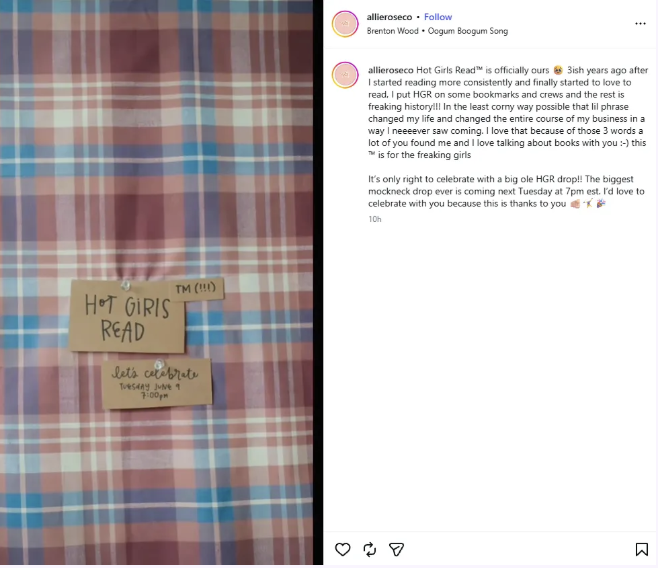
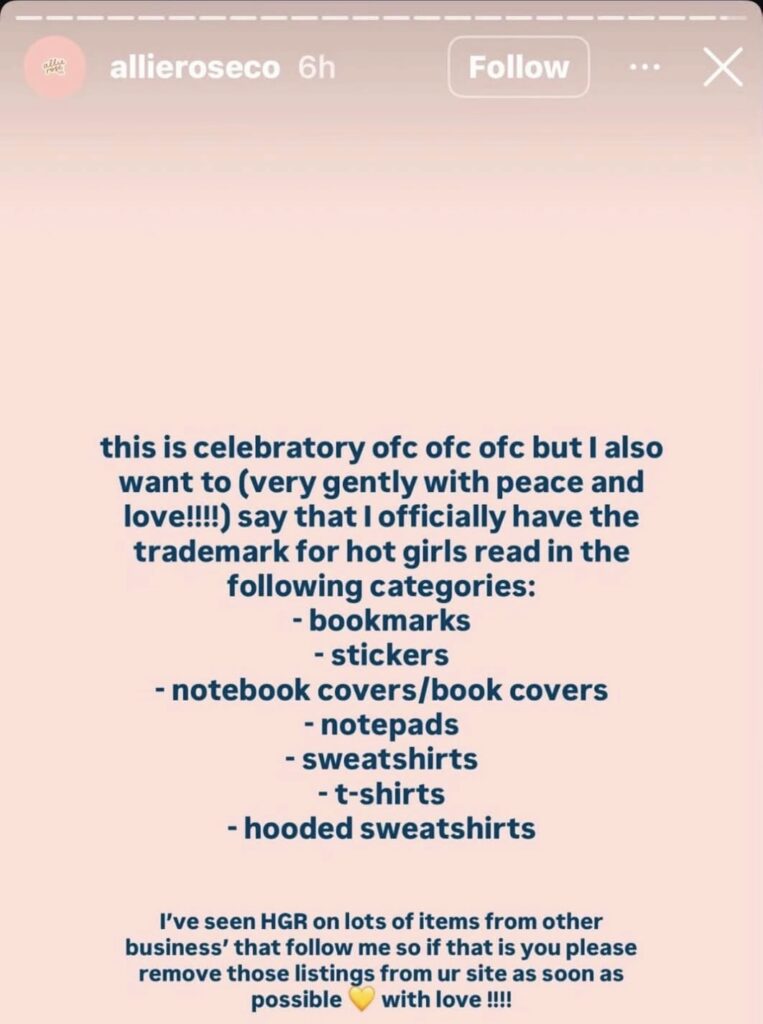
According to public discussions circulating online, Allie Rose Co announced that “Hot Girls Read” has officially been trademarked and suggested that others should cease using the phrase on bookmarks, merchandise, and related products.
The announcement immediately drew criticism because many readers feel the phrase has been a widespread community slogan for years rather than a unique brand identifier belonging to one company.
A screenshot of the announcement, which has since circulated widely across social media and Reddit, states:
“Hot Girls Read™ is officially ours.”
For many readers, that statement became the center of the controversy.
The issue is not simply that a trademark exists. The issue is the perception that a common phrase used throughout the reading community is now being claimed as private intellectual property.
Why Readers Are Upset
The backlash has been remarkably consistent across platforms.
Readers are arguing that “Hot Girls Read” was already part of internet culture long before any trademark filing.
The phrase follows the same pattern as countless viral expressions that emerged from social media culture:
Hot girls read
Hot girls go to therapy
Hot girls love libraries
Hot girls stay hydrated
Hot girls support women
These phrases function as cultural memes rather than brand names.
Many people feel that attempting to secure exclusive ownership over “Hot Girls Read” is similar to trademarking a phrase that has already become part of the public conversation.
The criticism is not necessarily about whether the trademark is legally valid. It is about whether it is ethically appropriate.
The Difference Between Legal and Community Ownership
This controversy highlights an important distinction that many creators overlook.
A phrase can be legally trademarked while still belonging, culturally speaking, to a broader community.
Trademark law is designed to help consumers identify the source of goods and services. It exists to prevent confusion in the marketplace. It was never intended to allow someone to claim ownership over every cultural expression that gains popularity online.
When communities spend years building meaning around a phrase, many people believe there is a moral responsibility not to weaponize intellectual property rights against the very audience that helped popularize it.
That is why reactions have been so strong. Readers do not view “Hot Girls Read” as a company slogan. They view it as a community slogan.
The Small Business Problem
One of the biggest concerns raised by readers involves independent creators.
Bookish Etsy sellers, bookmark makers, apparel shops, and small businesses have been using “Hot Girls Read” products for years. Many operate on thin margins and do not have access to attorneys or intellectual property specialists.
When a larger creator or business obtains a trademark on a phrase that has become commonplace, smaller creators can suddenly find themselves facing takedowns, legal notices, or pressure to remove products.
Even if no lawsuits occur, the possibility alone creates fear. This is one reason discussions across Reddit and other platforms have become so heated.
Many readers worry that trademark enforcement could disproportionately affect small creators while benefiting the party that secured ownership.
Why This Feels Different Than Normal Branding
Most readers understand and support trademarks when they are used to protect genuinely unique brands, logos, slogans, and business identities. Nobody expects to be able to use another company’s trademarked name or branding without permission. The issue at the center of the “Hot Girls Read” controversy is that many readers do not view the phrase as a unique business identifier in the first place. Instead, they see it as a community-driven expression that has been widely used across social media, book clubs, merchandise, and reading spaces for years before any individual claimed ownership over it. That distinction is what makes this situation so contentious.
While consumers generally support intellectual property protections that safeguard original brands, they are far less receptive when a trademark appears to give one person exclusive control over language that has already become part of a shared cultural conversation.
The Streisand Effect Is Already Happening
Ironically, attempts to control language or claim ownership over widely used cultural phrases often have the opposite effect. Rather than limiting the use of “Hot Girls Read,” the controversy has brought unprecedented attention to both the phrase and Allie Rose Co itself. People who had never encountered the company before are now discussing it across Reddit, TikTok, Instagram, Threads, blogs, and newsletters.
The problem is that the conversation is not centered on the company’s products or its contributions to the reading community. Instead, it is focused on concerns about trademark enforcement, community ownership, and whether a shared piece of book culture should belong to any one person or business. For a creator-driven brand, that kind of publicity can be difficult to recover from, especially when the discussion becomes less about what you create and more about what you are perceived to be taking away from others.
Community Trust Matters More Than Legal Rights
One lesson from this controversy is that creators do not succeed solely because they have legal rights. They succeed because communities trust them.
Readers support businesses they believe are contributing positively to book culture. When a business appears to be taking ownership of something readers view as communal, that trust can erode quickly.
The strongest brands in the book space tend to grow by creating new ideas, not by claiming ownership over phrases that already belong to the culture.
Just because you can trademark something, should you?
The bigger question raised by the Hot Girls Read trademark controversy is not whether the trademark is legal, but whether it was ever a good idea.
Trademark law exists for a reason, and businesses deserve protection for original brands and products. But there is a difference between protecting something you created and claiming ownership over a phrase that many people believe already belonged to the wider reading community.
The backlash against Allie Rose Co suggests that readers are asking a simple question: just because you can trademark something, should you? In the eyes of many book lovers, the answer is no when that trademark comes at the expense of a shared piece of book culture.
Final Thoughts on the Allie Rose Co “Hot Girls Read” Trademark Controversy
The reaction to Allie Rose Co’s trademark announcement demonstrates how strongly readers feel about community ownership, creative expression, and the culture they have collectively built online.
Whether the trademark ultimately remains enforceable is a legal question.
Whether it was the right move is a community question.
And based on the response from readers across social media, Reddit, and the broader book community, many people have already made up their minds.
Frequently Asked Questions About the Hot Girls Read Trademark Controversy
What is the Allie Rose Co controversy?
The Allie Rose Co controversy centers around the company’s announcement that it had successfully trademarked the phrase “Hot Girls Read.” The announcement sparked widespread debate across the book community, with many readers and creators arguing that the phrase was already a widely used part of online reading culture before the trademark was obtained.
Who trademarked “Hot Girls Read”?
What is the Hot Girls Read trademark controversy?
The Hot Girls Read trademark controversy refers to the backlash that followed Allie Rose Co’s trademark announcement. The debate has focused on intellectual property rights, community ownership, trademark enforcement, and whether popular internet phrases should be eligible for exclusive ownership.